How to Avoid Scams on Wallapop and Vinted in 2026
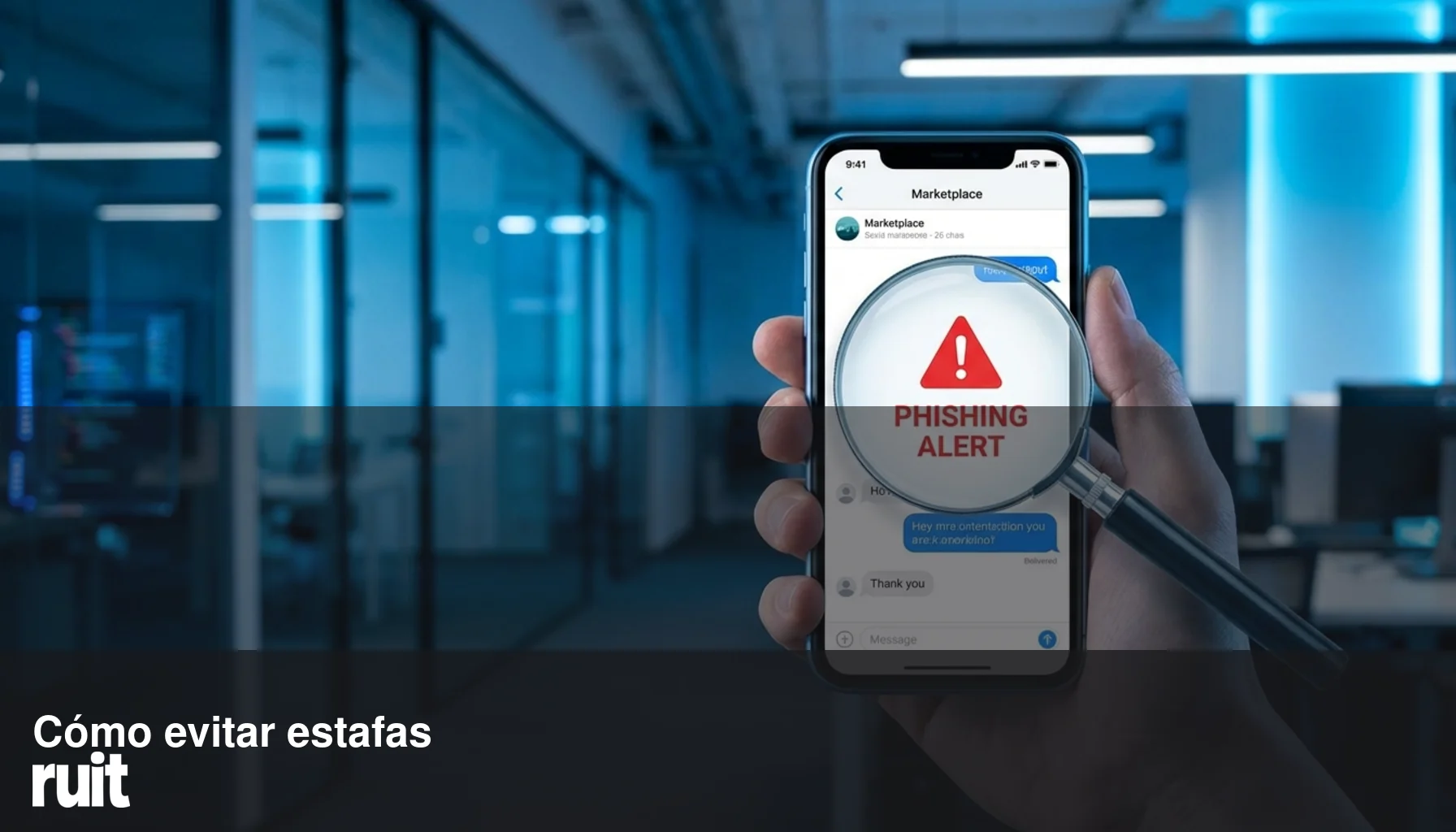
Table of Contents
Thousands of transactions happen every day on Wallapop and Vinted across Europe. The vast majority are perfectly legitimate, but a small percentage of users try to take advantage of others. The good news is that virtually all second-hand scams follow recognizable patterns. If you know how to identify them, you can buy and sell with complete peace of mind.
In this guide, we break down the most common scams on each platform, the red flags that should put you on alert, and the concrete steps to protect yourself, whether you’re buying or selling.
The Most Common Scams on Wallapop
Wallapop, due to its large user base and the option for in-person deals, attracts several types of fraud. These are the ones that come up most often in 2026:
1. The Fake Buyer with an External Link
A supposed buyer contacts you showing great interest in your product. Everything seems normal until they say they’ve already made the payment and send you a link to “confirm” it. That link mimics Wallapop’s website but is actually a phishing page designed to capture your banking details.
How it works: You receive a message like “I’ve already paid through Wallapop Protect, confirm the shipment here” with a link that isn’t wallapop.com. When you enter your card details to “receive the payment,” the scammers capture them.
How to avoid it: Wallapop never asks you to confirm payments through links in the chat. All legitimate transactions are managed within the app.
2. The Reverse Payment Request Scam
This is one of the most clever and dangerous scams, particularly common in Spain where it exploits Bizum - a popular instant mobile payment system similar to Venmo or Zelle. The supposed buyer says they’ll pay you through Bizum (or a similar instant payment app). What they actually do is send you a money request instead of a transfer. If you accept without reading carefully, you end up being the one who pays.
How it works: The scammer sends you a payment request through Bizum with a description like “Payment for Wallapop product.” If you don’t notice it says “request” instead of “transfer received,” you tap accept and send them your money.
How to avoid it: Always read payment notifications carefully. An incoming transfer doesn’t require you to accept anything - the money simply appears in your account. This applies to any instant payment app: if you’re asked to “accept” a payment, double-check whether it’s actually a request for money going the other way.
3. The Shipping Switch Scam
You buy a product, receive the package, and upon opening it, find something completely different: a brick, an empty box, or a lower-value item. The seller has already been paid.
How it works: The seller ships a package with similar weight but different contents than advertised. If you don’t record the unboxing, it’s your word against theirs.
How to avoid it: Whenever you buy valuable items, record a video while opening the package. This serves as valid evidence for platform disputes.
4. The Phishing SMS (Smishing)
You receive an SMS supposedly from Wallapop saying your account has been suspended, you have a pending payment, or you need to verify your identity. The link leads to a fake page identical to Wallapop’s.
How it works: The SMS includes a link to a website that replicates Wallapop’s interface. They ask for your username, password, and banking details. Once entered, the scammers access your real account.
How to avoid it: Wallapop doesn’t send SMS for account management. Any legitimate notification comes through the app. When in doubt, open Wallapop directly from your phone, never from a link.
5. The In-Person Meetup Scam
You arrange to meet for an in-person sale. The buyer examines the product, pays you in cash, but hands you counterfeit bills. Another variant: the buyer “tests” the product (a phone, for example) and runs off.
How it works: They exploit the trust that comes with face-to-face transactions. Counterfeit bills are often in medium denominations that get less scrutiny than larger ones.
How to avoid it: Always meet in public places with cameras (shopping centers, police stations). If paying in cash, check the bills. For high-value items, require a bank transfer before handing over the product.
The Most Common Scams on Vinted
Vinted has a different model: all shipments go through the platform and payment is held until the buyer confirms receipt. This eliminates some scams but creates others.
1. The Fake Tracking Number
The seller marks the item as shipped and provides a tracking number that doesn’t correspond to your package. Vinted’s system interprets that the shipment has been made and, after the protection window expires, automatically releases the payment.
How it works: The scammer enters a real tracking number (from a completely different shipment) that shows “delivered.” If you don’t file a claim within the deadline, the money gets transferred to the seller.
How to avoid it: Actively track your package. If the tracking shows “delivered” but you haven’t received anything, open a dispute immediately before the protection period expires.
2. The “Not as Described” Item
You buy a branded garment and receive a counterfeit. Or the item arrives with defects that weren’t shown in the photos. Some sellers photograph products at strategic angles to hide stains, tears, or wear.
How it works: The photos show the product at its best angle. Defects aren’t mentioned in the description. When you complain, the seller says it “was already like that” and the photos were clear.
How to avoid it: Before buying, ask for additional photos with good lighting. Check the brand labels in the photos. If the price seems too low for a premium brand, be skeptical.
3. Account Hijacking
A scammer gains access to your Vinted account (usually through phishing or because you used the same password on another service that was compromised). They list nonexistent items for sale, collect payments from buyers, and disappear. You’re left with the complaints and a suspended account.
How it works: They access your account, change the payout details to their own, and list items at attractive prices. Buyers pay but never receive anything.
How to avoid it: Enable two-factor authentication, use a unique password for Vinted, and periodically review your account activity.
4. The Fraudulent Refund
You sell an item that arrives perfectly, but the buyer opens a dispute claiming the product didn’t arrive or arrived damaged. Vinted may rule in the buyer’s favor if you don’t have evidence of the shipment’s condition.
How it works: The buyer receives the product, uses it or resells it, then claims it never arrived or is damaged. Without photographic evidence of the packaging, Vinted often resolves in favor of the buyer.
How to avoid it: Photograph the item right before packaging and record the packing process. Always use tracked shipping.
Red Flags: How to Spot a Scammer
Regardless of the platform, scammers share recognizable patterns. Here’s a checklist of warning signs that should raise your alarm:
| Red Flag | Risk Level | What to Do |
|---|---|---|
| Profile created less than a week ago, no reviews | High | Exercise extreme caution, ask for more info |
| Asks to continue the conversation outside the app (WhatsApp, email) | Very high | Decline and report |
| Price too good to be true | High | Compare with similar listings |
| Pressure to close the deal fast (“another buyer wants it”) | Medium-high | Don’t let yourself be pressured, take your time |
| Sends links to “confirm” payments or shipments | Very high | Never click, report immediately |
| Generic photos or images taken from the internet | High | Do a reverse image search on Google |
| Severe grammar errors or messages that look machine-translated | Medium | Not definitive, but adds up as an indicator |
| Refuses to use the platform’s payment system | Very high | Cancel the transaction |
| Asks for your banking details directly | Very high | Report immediately |
| Offers to pay more than the listed price | High | Nobody overpays voluntarily |
As a general rule: if something feels off, trust your gut. It’s better to lose a sale than to lose your money.
How to Protect Yourself as a Buyer
If you buy regularly on Wallapop or Vinted, these practices drastically reduce your risk:
Always use the platform’s payment system. It’s the only way to have coverage if something goes wrong. If a seller insists you pay by bank transfer, Venmo, Zelle, or PayPal outside the app, that’s a massive red flag.
Check the seller’s profile. Look at the account age, number of completed sales, and especially reviews from other buyers. A seller with dozens of positive reviews is much more reliable than a newly registered one.
Ask for additional photos. If the listing only has one or two photos, ask for more. Request photos of the item with a piece of paper showing today’s date. A legitimate seller won’t have any problem doing this.
Compare prices. If the latest iPhone is selling at 40% of its market price, something doesn’t add up. Search for similar items on the same platform to get a realistic price reference.
Stay within the app. All communication and payment should remain within the platform. This not only protects you from scams but also gives you a verifiable history in case of a dispute.
Record the unboxing. Especially for valuable items. An uncut video showing the sealed package, the opening, and the contents is the best evidence for any claim.
How to Protect Yourself as a Seller
Sellers are also frequent targets for scammers. Protect yourself with these measures:
Never ship the product until payment is confirmed within the platform. Don’t trust screenshots of supposed transfers. Screenshots can be faked in seconds. Wait until the app confirms payment receipt.
Photograph everything before shipping. Take photos of the item in the exact condition you’re sending it, the packaging process, and the shipping label. These images are your insurance against false claims.
Use tracked shipping. Always. No exceptions. An untracked shipment has no proof of delivery, leaving you unprotected if the buyer claims they never received it.
Verify instant payment requests carefully. As we explained above, make sure you’re receiving a transfer and not a money request. If you use instant payment apps like Venmo, Zelle, or Bizum, only do so as a supplement to an in-person sale where you’ve already confirmed the funds.
Be suspicious of buyers who offer more than the listed price. Nobody voluntarily pays more than you’re asking. If someone offers 20% above your price, they’re setting up a scam.
For in-person deliveries, meet in public places. Police stations, shopping centers, or busy cafes. Never at your home or in isolated locations.
What to Do If You’ve Been Scammed
If you’ve already fallen victim to a scam, act fast. Every hour counts.
Step 1: Document everything. Take screenshots of the conversation, the scammer’s profile, the transaction details, and any links they sent you. Don’t delete anything.
Step 2: Report within the platform. Both Wallapop and Vinted have options to report users and open disputes. Do it immediately. Explain what happened in detail and attach the evidence.
Step 3: Contact your bank. If you’ve shared banking details or made a payment, call your bank to block your card or reverse the transaction. Many banks can process a chargeback if the claim is filed in time.
Step 4: File a police report. You can file a report online or visit your local police station. Even if the amount is small, the report matters for pursuing the scammers and may be necessary for your bank claim.
Step 5: Change your passwords. If you’ve entered your credentials on a fake website, immediately change the password for the affected platform and any other service where you use the same password.
Step 6: Report to your national cybersecurity agency. Most countries have a cybersecurity agency or consumer protection body that can guide you through next steps and logs the incident to help prevent future scams (e.g., INCIBE in Spain, Action Fraud in the UK, FTC in the US, or CERT for your country).
Official Protection on Each Platform
Both platforms have protection systems, but they work differently. It’s important to understand what they cover and what they don’t.
Wallapop Protect
Wallapop Protect is Wallapop’s integrated shipping and payment system. When you buy or sell through this system:
- Payment is held until the buyer confirms the product was received in expected condition.
- The buyer has 48 hours from receipt to open a dispute.
- Wallapop mediates in case of conflict between buyer and seller.
- It doesn’t cover transactions outside the platform. If you paid by bank transfer, instant payment app, or in person, there’s no protection.
Vinted Buyer Protection
Vinted offers automatic protection on all purchases made through the platform:
- Money isn’t transferred to the seller until you confirm everything is correct.
- You have 2 days after delivery to verify the item and open a dispute if there are issues.
- Vinted reviews disputes and can order item return and refund.
- Disputes are resolved with evidence. Photos of the received item, comparisons with the original listing, and any communication with the seller are all relevant.
In both cases, protection only works if you use the integrated payment systems. Any agreement outside the platform leaves you without coverage.
Frequently Asked Questions
Is it safe to buy on Wallapop and Vinted?
Yes, as long as you use the platform’s payment system and follow the basic precautions described above. The vast majority of transactions are completed without issues. Scammers look for easy victims, and an informed buyer rarely is one.
Can I recover my money if I get scammed?
It depends on how you paid. If you used the platform’s payment system, you have good chances through the internal dispute process. If you paid by bank transfer or instant payment outside the app, recovery is more difficult, though your bank may attempt a chargeback and you can always file a police report.
Do scammers use profiles with good reviews?
It’s uncommon but it can happen. Some scammers buy accounts with positive histories or build reputation with small legitimate sales before attempting a bigger scam. That’s why reviews are a useful indicator but not infallible.
Is it safe to meet in person for a sale?
Yes, as long as you do it in a public, busy place. Some police stations offer their facilities as safe meeting points for second-hand transactions. Avoid going alone if dealing with high-value items.
What should I do if I receive a suspicious message?
Don’t reply, don’t click any links, and report the user within the platform. If the message includes a link, you can also report it to your national cybersecurity agency. Block the user after reporting.
Buy and Sell with Confidence
Second-hand marketplaces are an excellent way to save money and give a second life to items you no longer need. Scammers exist, but they’re a minority using predictable and repetitive tricks.
Now that you know the most common scams and the red flags, you’re in a much better position to protect yourself. Remember the three fundamental rules: never leave the platform to pay or communicate, be skeptical of anything that seems too good to be true, and always document everything you can.
With these precautions, buying and selling second-hand is safe, economical, and sustainable. Don’t let the fear of a potential scam stop you from taking advantage of everything these platforms have to offer.