What Is Crosslisting and How It Can Multiply Your Sales
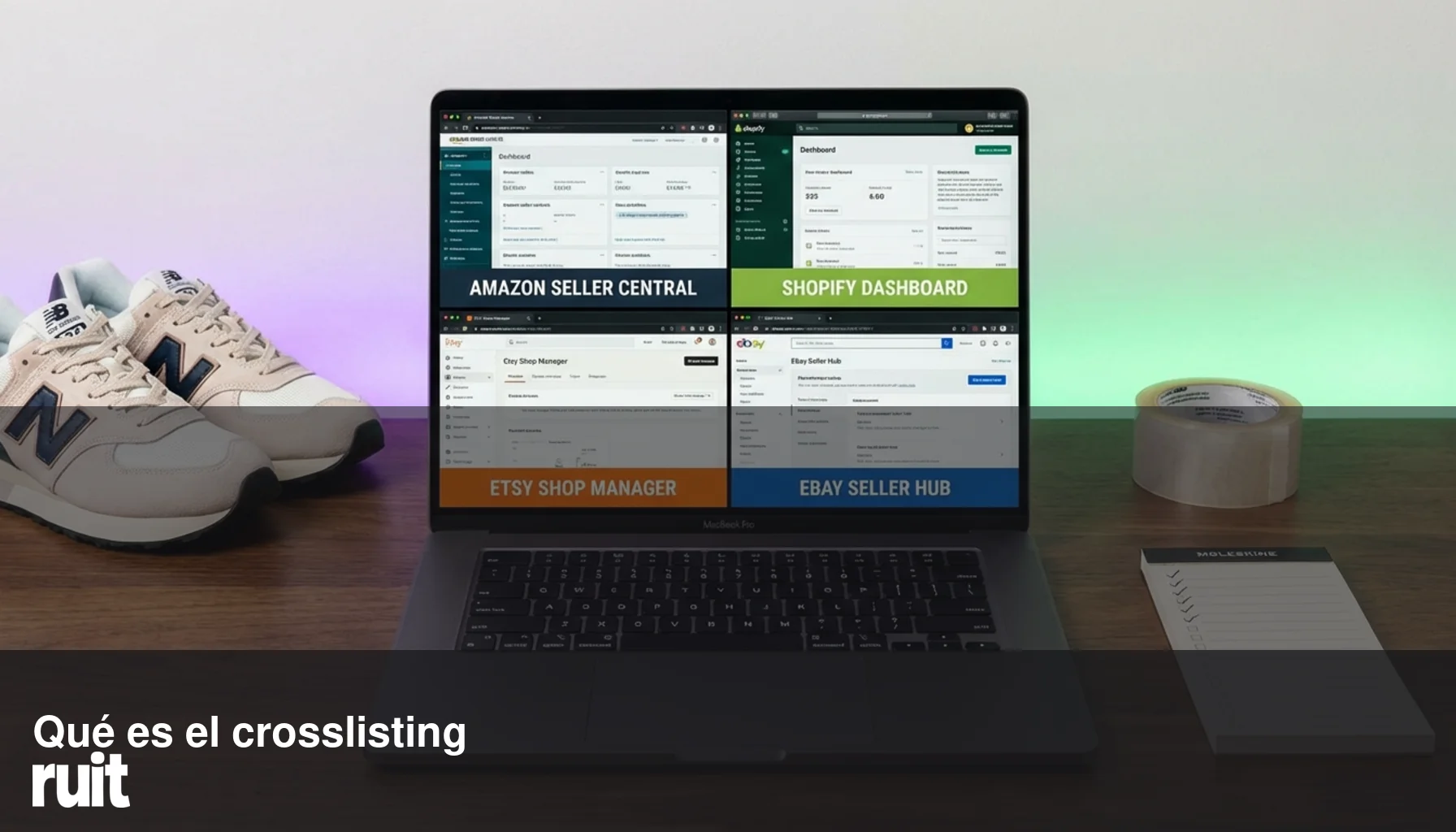
If you’re listing your products on just one platform, you’re leaving money on the table. That’s not an exaggeration: each marketplace has its own audience, and the vast majority of buyers only use one or two apps to search for what they need. If you’re not there, you simply don’t exist to them.
The good news is that there’s a strategy the most successful sellers have been using for years and it’s becoming more accessible than ever: crosslisting. In this article, we explain what it is, how it works, and how you can start applying it today to multiply your sales.
What Is Crosslisting?
Crosslisting (also called crossposting) is the practice of listing the same product on multiple selling platforms simultaneously. Instead of uploading your Zara jacket only to Vinted, you also list it on Wallapop, eBay, and any other marketplace where it might find a buyer.
Think of it as opening multiple stores on different shopping streets in your city. You’re not selling more products, but you are exposing the same products to many more people. And in the online world, more visibility translates directly into more sales.
The concept is simple, but its impact is huge. In fact, it’s the foundation on which professional resellers and multichannel e-commerce businesses operate.
Why It Works: The Numbers Don’t Lie
Let’s look at a concrete example.
Imagine you have 50 products listed only on Wallapop. With a typical conversion rate of 3-5%, you sell between 1 and 3 products per week. Not bad, but it’s not paying the bills either.
Now imagine those same 50 products are listed on three platforms: Wallapop, Vinted, and eBay. You’ve tripled your exposure without creating a single new product. The result:
| Scenario | Platforms | Estimated Exposure | Sales/Week |
|---|---|---|---|
| Wallapop only | 1 | 500 views | 1-3 |
| Wallapop + Vinted | 2 | 1,100 views | 3-5 |
| Wallapop + Vinted + eBay | 3 | 1,800 views | 5-9 |
These numbers are indicative, but they reflect a reality that experienced sellers consistently confirm: listing on multiple platforms can multiply your sales between 2x and 4x with the same inventory.
On top of that, each platform attracts a different buyer profile. On Vinted, you’ll find people looking for fashion at a good price. On Wallapop, people who want to buy all sorts of things near their location. On eBay, collectors and international buyers willing to pay more for niche items. Crosslisting doesn’t just multiply volume - it diversifies your sales opportunities.
Manual vs. Automated Crosslisting
This is where theory meets reality. Because yes, selling on multiple platforms works. But doing it manually is exhausting.
Manual Crosslisting
Listing a single product on three platforms manually involves:
- Uploading the photos three times (and each platform has its own format and size requirements)
- Writing the description three times (adapting it to each marketplace’s tone)
- Setting the price on each site (accounting for different commission rates)
- Managing messages across three different apps
- Updating stock manually every time you sell on one platform
If you have 10 products, this is annoying. If you have 50 or 100, it’s a full-time job. And if you don’t update stock in time, you end up selling something you no longer have, leading to cancellations, bad reviews, and angry buyers.
Automated Crosslisting
Automated crosslisting tools eliminate this repetitive work. The idea is straightforward: you create the listing once and the tool publishes it across all the platforms you choose. When you sell on one, the stock is updated on the others automatically.
The differences are clear:
| Aspect | Manual | Automated |
|---|---|---|
| Time per product | 15-30 min | 2-5 min |
| Risk of errors | High | Low |
| Inventory management | Manual (risky) | Synchronized |
| Scalability | Very limited | High |
| Cost | Free (but your time has value) | Monthly subscription |
The decision depends on your volume. If you sell 5 items a month casually, manual crosslisting is viable. But if you want to scale or you’re already managing a sizeable inventory, automation isn’t a luxury - it’s a necessity.
The Best Platforms for Crosslisting
Not all marketplaces are equal, and the combination you choose depends on what you sell. Here’s a quick guide to the most relevant platforms:
| Platform | Best For | Seller Commission | Integrated Shipping | Audience |
|---|---|---|---|---|
| Wallapop | All types of products | 0% local, ~10% with shipping | Yes | Spain (growing EU) |
| Vinted | Fashion and accessories | 0% (buyer pays) | Yes | Europe-wide |
| eBay | Niche, collectibles, electronics | 10-12% | Yes | Global |
| Facebook Marketplace | Quick local sales | 0% | No | Global |
| Mercari | Fashion, home goods, general | ~10% | Yes | US, Japan |
| Depop | Streetwear, vintage fashion | ~10% | Yes | US, UK, EU |
The most popular combination for fashion and general items in Europe is Wallapop + Vinted + eBay. If you sell clothing, Vinted is essential. If you sell electronics or niche items, eBay opens the door to the international market. And Wallapop is the go-to for any seller in Spain.
How to Get Started with Crosslisting Step by Step
You don’t need to change everything overnight. Here’s a progressive action plan:
Step 1: Choose Your Platforms
Start with two or three. If you already sell on one marketplace, add a second one as your next platform. Analyze where your type of product gets the most traction and prioritize accordingly.
Step 2: Prepare Your Inventory
Before listing on multiple sites, make sure you have:
- Quality photos: well-lit, from multiple angles, without distracting backgrounds
- Complete descriptions: condition, measurements, brand, model, defects
- Defined prices: account for each platform’s commissions when setting prices
Step 3: Create Your Listings
You can do this manually at first to understand how each platform works. Slightly adapt the descriptions to each marketplace’s tone (Vinted is more casual, eBay more detailed).
Step 4: Manage Your Stock
This is the critical point. When you sell a product on one platform, remove it immediately from the others. If you use a crosslisting tool, this happens automatically. If you’re doing it manually, set alerts and do it right away.
Step 5: Optimize and Scale
Once you have the system running, analyze:
- Which platform you sell fastest on
- Where you get the best prices
- What types of products perform best on each site
With this data, you can fine-tune your strategy and decide whether it’s worth adding more platforms or investing in an automation tool.
Crosslisting Tools in 2026
The crosslisting tools market has matured significantly in recent years. Here’s an honest comparison of the main options:
| Tool | Main Platforms | Target Market | Wallapop | Vinted | Price From |
|---|---|---|---|---|---|
| Ruit | Wallapop, Vinted, eBay + 6 more | Europe (Spain, France, Italy…) | Yes | Yes | Paid plan |
| List Perfectly | Poshmark, Mercari, eBay, Depop | United States | No | No | ~$29/mo |
| Crosslist | Poshmark, Mercari, Depop, eBay | United States | No | No | ~$20/mo |
| Vendoo | Poshmark, Mercari, eBay, Depop | United States | No | No | Free (limited) |
| Sellbrite | Amazon, eBay, Etsy, Walmart | Professional e-commerce | No | No | ~$29/mo |
As you can see, there’s a clear pattern: most crosslisting tools are designed for the US market. If you sell on Poshmark or Mercari, you have plenty of options. But if you sell on Wallapop and Vinted, which are the dominant platforms in Spain and Europe, the options shrink dramatically.
Ruit was built precisely to fill that gap. It’s the only crosslisting tool that integrates the most popular European marketplaces, including Wallapop, which until now had no integration in any tool. It also includes features like AI-powered description generation, inventory management sync, and centralized message management.
That said, the best tool is the one that fits your platforms and your volume. If you sell exclusively on eBay and Amazon, Sellbrite might be a better choice. If your market is the US, List Perfectly or Vendoo are solid alternatives. Evaluate your needs before choosing.
Common Crosslisting Mistakes
Doing crosslisting poorly can be worse than not doing it at all. These are the most frequent mistakes:
1. Not Updating Stock in Time
This is the most serious and most common error. You sell a product on Vinted but don’t remove it from Wallapop. Someone buys it there too. Now you have to cancel, explain yourself, and you get a bad review. Stock synchronization is the first thing you need to solve, whether with an automated tool or with iron discipline.
2. Copying and Pasting the Same Descriptions Without Adapting
Each platform has its audience and its style. A description that works on eBay (detailed, technical, with specifications) can feel excessive on Wallapop, where buyers prefer something more direct and casual. Take a minute to adapt the tone.
3. Not Adjusting Prices by Platform
Commissions vary significantly between platforms. If you set the same price on Vinted (0% commission) and eBay (12% commission), you’re giving away margin. Calculate your net price on each platform and adjust accordingly.
4. Ignoring Each Marketplace’s Rules
Every platform has its own rules about what can be sold, how photos should look, and what information is required. Not following these rules can get your listings removed or, in the worst case, your account suspended.
5. Trying to Be on Too Many Platforms at Once
More isn’t always better. It’s preferable to manage three platforms well than to be on six chaotically. Start with a few, master them, and expand when you have the system under control.
Frequently Asked Questions
Is it legal to sell the same product on multiple platforms?
Yes, completely legal. There’s no restriction preventing you from listing an item on multiple marketplaces. The only thing you need to do is remove it from the others when it sells.
Do I need a paid tool for crosslisting?
Not necessarily. You can start manually if your volume is low (fewer than 20 products). But as you scale, an automated tool will save you hours of work and reduce stock errors.
How many platforms should I use?
To start, two or three are enough. The most effective combination in Europe is Wallapop + Vinted for general products and fashion. If you sell niche items or want international reach, add eBay.
Does crosslisting work for online stores or only for second-hand?
It works for both. Second-hand sellers use it to maximize exposure for unique items. Online stores (e-commerce) use it as a multichannel strategy to diversify their sales channels. The concept is the same, though the tools may vary.
How do I avoid selling the same product twice?
The safest way is to use a tool with automatic inventory management sync. If you do it manually, remove the product from the other platforms immediately after confirming the sale. Don’t put it off until later.
Conclusion
Crosslisting isn’t a passing trend: it’s the natural evolution of online selling. In a market where each platform has its own audience and strengths, limiting yourself to a single channel means limiting your sales potential.
The strategy is clear: list on multiple platforms, keep your stock synchronized, and adapt your listings to each marketplace. You can start manually to understand the process, and when the volume justifies it, invest in a tool that automates the repetitive work.
If you sell in Europe and want to try automated crosslisting, Ruit lets you list on Wallapop, Vinted, eBay, and more from a single place. You can start today and scale at your own pace.
Your products already exist. They just need to be seen by more people.