Selling a Suit Resale Guide: From Prep to Final Sale

Table of Contents
- Table of Contents
- Why Selling a Suit Takes More Effort Than a T-Shirt
- Prep Work That Lifts Your Final Price
- Measurements That Build Buyer Confidence
- Photography That Sells the Fit
- Writing Titles and Descriptions That Match the Buyer
- Pricing by Use Case and Holding Time
- Shipping, Packaging, and Post-Sale Communication
You pull a suit from the back of the closet, and it looks almost new. Then you remember the questions buyers ask right away, jacket length, trouser break, shoulder fit, whether the lining smells clean, and whether the alteration bill will wipe out the deal. That’s why selling a suit rarely behaves like selling a T-shirt. The garment carries more fit risk, more occasion risk, and more trust risk, especially online where buyers can’t feel the fabric or try it on before they commit.
The market context backs that up. The global men’s suit market was estimated at US$12.6 billion in 2022 and projected to reach US$20.2 billion by 2032, with a 4.9% CAGR over the decade, while another study put it at US$13.5 billion in 2024 and forecast US$16.8 billion by 2030 at 3.8% CAGR Allied Market Research. Retail demand can also spike hard, with John Lewis reporting own-brand suit sales up 68% year on year and formal outerwear up 584% in 2025, while Marks & Spencer sold 37,500 suits priced at £120 in a single month and said that reflected an 18% increase in suit sales over two years Retail Gazette. Those aren’t signals to rush. They’re signals to prepare, segment, and price with intent.
Table of Contents
- Why Selling a Suit Takes More Effort Than a T-Shirt
- Prep Work That Lifts Your Final Price
- Measurements That Build Buyer Confidence
- Photography That Sells the Fit
- Writing Titles and Descriptions That Match the Buyer
- Pricing by Use Case and Holding Time
- Shipping, Packaging, and Post-Sale Communication
Why Selling a Suit Takes More Effort Than a T-Shirt
A T-shirt can be photographed flat, listed with one size tag, and sold on instinct. A suit usually can’t. Buyers want to know whether the jacket works for their shoulders, whether the trousers can be altered without ruining the line, and whether the fabric and lining still look sharp enough for the event they have in mind.
That’s why suit listings attract more scrutiny than generic apparel. A buyer shopping for a business suit wants something different from a buyer shopping for a wedding suit, and both of them want confidence that the fit won’t become a project. If you list every suit as “formalwear,” you flatten the very details that make one garment easy to sell and another one sit forever.
Fit, occasion, and brand variance change the sale
Suit resale lives or dies on fit, occasion, and brand variance. Two navy two-button suits can look similar in a photo and behave very differently once a buyer checks the shoulders, lapels, rise, and trouser break. That’s also where brand inconsistency matters, because size labels never tell the full story on their own.
Practical rule: if the buyer has to guess whether the suit works for their body or their event, the listing is already losing momentum.
The best sellers treat suit inventory like a set of use cases, not a pile of identical formal garments. A business suit sells on repeatability and office wear. A wedding suit sells on presentation and timing. An interview suit sells on confidence and clean lines. A vintage suit sells on character. A luxury suit sells on label, fabric, and craftsmanship. Each one needs a different angle, even when the garment itself is plain.
That is the central trade-off in this category. Faster listings save time, but a thin listing usually gives the buyer more reasons to hesitate. Slower preparation takes more work, but it gives you better control over fit expectations, return risk, and final price.
Prep Work That Lifts Your Final Price
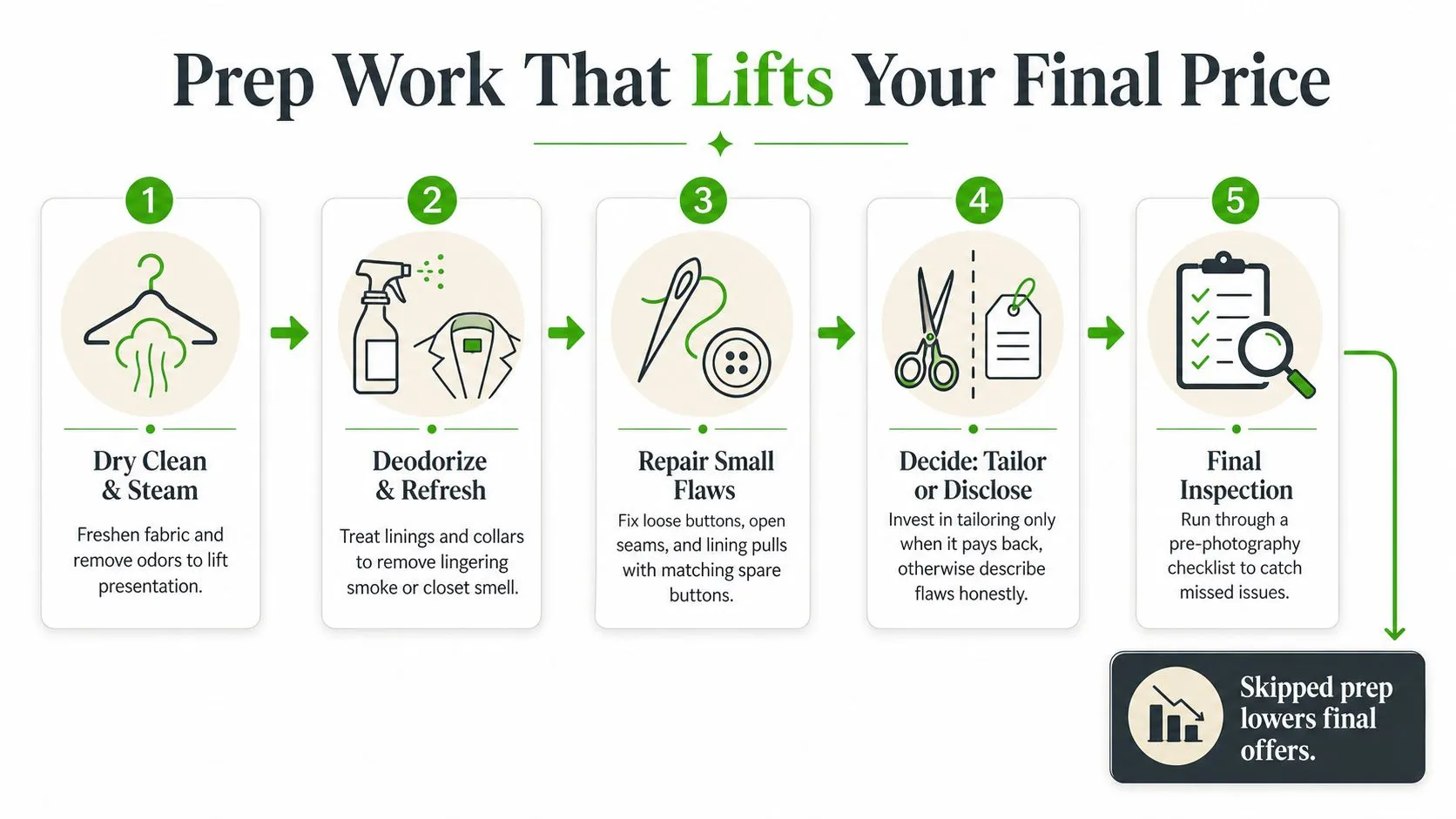
The easiest money in suit resale is often the work nobody wants to do. Before I list a suit, I check smell, fabric hand, seams, buttons, lining, and the inside pockets, because those are the places buyers notice as soon as the jacket opens up in a photo. A suit that looks fine on a hanger can still feel tired if the collar holds odor or the lining pulls at the armhole.
Start with cleaning. If the suit has any stale closet smell, smoke, or event wear, dry clean it or at least steam and air it properly. Then refresh the fabric, because buyers read freshness as care, and care as lower risk. Minor repairs matter too. A loose button, open seam, or lining pull signals neglect even when the damage is small.
Fix what’s cheap to fix, disclose what isn’t
Use matching spare buttons when you can, especially on sleeve buttons and front closures. If the jacket needs a simple repair that preserves the sale, do it. If the flaw is bigger, don’t hide it. Hiding damage is expensive because it turns into disputes, poor reviews, or returns after the buyer notices what the photos didn’t show.
A good prep pass usually includes:
- Dry clean or steam first: remove stale odors and restore drape before photography.
- Check all closures: test front buttons, sleeve buttons, trouser hook-and-bar closures, and zippers.
- Inspect the lining: look for pulls, tears, and wear under the arms and inside the chest.
- Repair small faults: fix loose threads, open seams, and missing buttons if the cost is reasonable.
- Decide on tailoring: only invest when the repair clearly improves saleability, otherwise disclose the flaw plainly.
For sellers who want a broader resale workflow, the operational basics in this online reselling guide line up well with suit prep, especially the habit of cleaning up inventory before it hits the market. That discipline matters more here because a suit is judged from the inside out. Buyers aren’t just buying a look, they’re buying confidence that the garment will hold its shape and wear cleanly.
Measurements That Build Buyer Confidence
A suit buyer doesn’t want a vague size tag. They want enough detail to decide quickly whether the garment has a real chance of fitting, because that’s what reduces back-and-forth messages and avoids dead-end offers. The measurements that matter most are chest, sleeve, inseam or trouser length, and jacket length, with shoulder width as a valuable extra when you have it.
Measure the jacket on a flat surface, keep the tape consistent, and write the numbers in the order a buyer would think through them. Chest tells them whether the torso has room. Sleeve tells them whether the jacket will sit correctly at the wrist. Jacket length tells them whether the proportions work for their frame. Trouser length helps with break and hem planning. Shoulder width can save you from the most common fit mismatch.
Turn raw numbers into buyer self-selection
The goal isn’t just to store data, it’s to help the right buyer self-select. A clearly measured suit invites a better message from someone who already knows it’s in range. A vague listing attracts “will this fit me?” questions that go nowhere.
Practical rule: list measurements in the description and repeat the most important ones in the first line of the listing if the platform allows it.
This is also where alteration economics matter. A suit can look cheap at the sticker price and expensive after tailoring. If the jacket needs sleeve shortening, trouser hemming, or waist adjustment, the buyer wants to know that upfront. If the garment is already close to ready-to-wear, say so. If it needs work, say that too. Buyers are usually more forgiving of a suit that needs visible tailoring than a suit whose listing makes the tailoring surprise feel hidden.
That kind of clarity is especially important in cross-border or multi-channel resale, where sizing can vary by brand and region. A buyer comparing a custom-fitted jacket against an unfamiliar size tag is already doing mental work. Good measurements reduce that friction before the conversation starts.
Photography That Sells the Fit
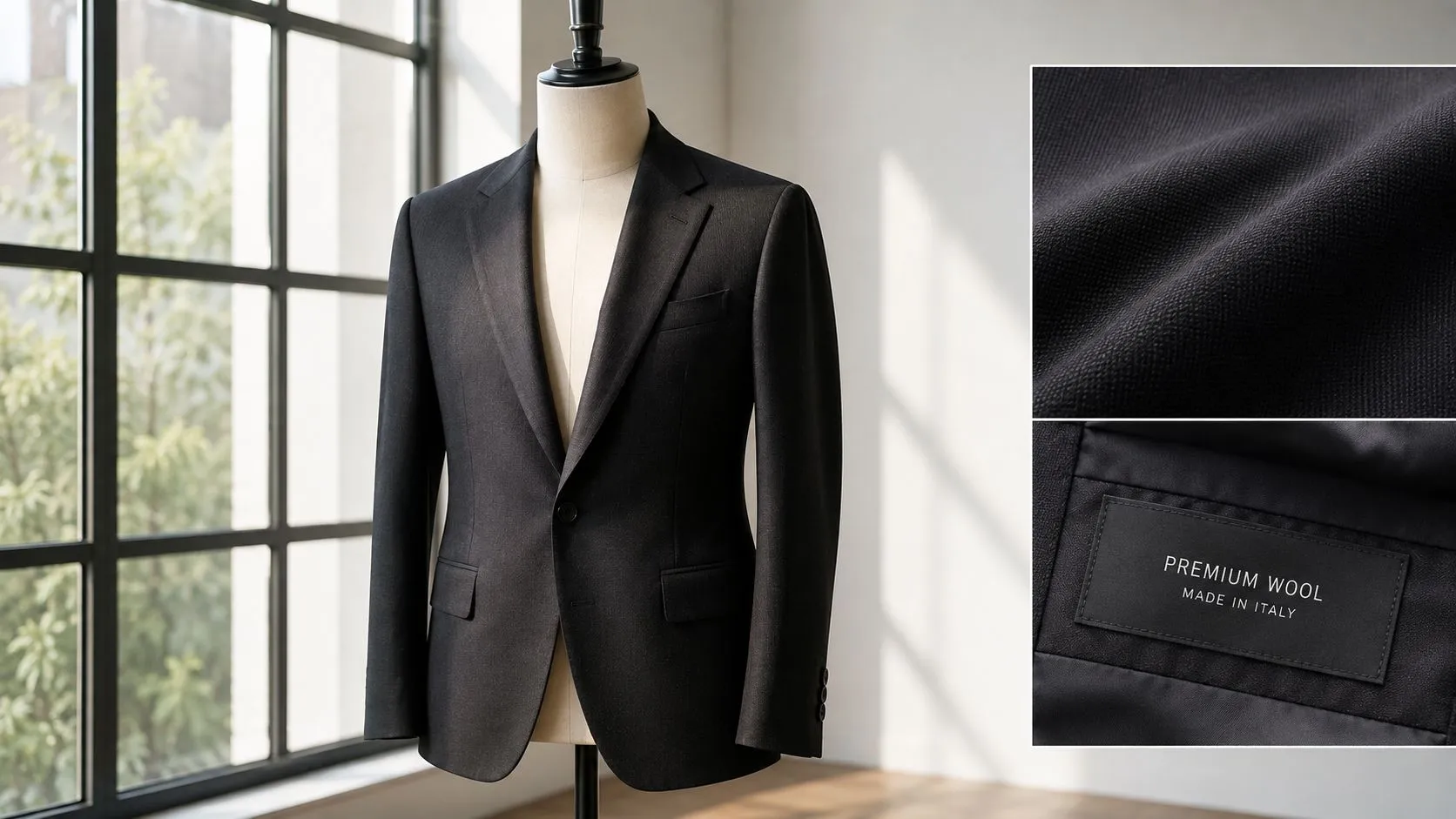
Suit photos need to show structure, not just color. A buyer is looking for shape through the shoulder, line through the lapel, and condition in the fabric, so the photo setup has to support those details. Natural daylight near a window usually works best, because it keeps navy, black, grey, and pattern textures readable without the harsh shadows that make a jacket look boxy.
Use a neutral background and keep the garment cleanly presented. Button the jacket, smooth the lapels, and remove hanger bumps before shooting. If you use a mannequin, make sure the fit doesn’t distort the jacket into a shape that looks tighter than it is. If you hang it, avoid clutter behind it. The goal is a calm frame that lets the suit do the work.
Shoot the views buyers actually need
The core shots are straightforward, but they need to be disciplined.
- Full front: shows proportion, button stance, and lapel shape.
- Full back: shows venting, shoulder behavior, and overall balance.
- Label close-up: proves brand, fabric, and size tag.
- Texture close-up: shows weave, sheen, and any pilling or wear.
- Flaw shot with scale: if there’s damage, show it clearly with a ruler or similar reference.
If a marketplace favors cut-out product images, AI background removal can help keep the listing visually consistent across a catalog. That matters when you’re cross-listing, because suit photos can look messy fast if one background is bright, another is beige, and another is a bedroom wall. Consistency makes the inventory feel managed rather than improvised.
One more rule from experience, don’t oversell the photos. If the suit has a subtle wear mark and you crop it out, the buyer will notice later and trust drops immediately. Clean photos help the sale, but honest photos protect it.
Writing Titles and Descriptions That Match the Buyer
A strong suit title tells the buyer what the garment is for before it tells them what it is. That means the opening words should match the likely use case, not just the brand name. A buyer searching for a wedding outfit thinks differently from someone shopping for office wear, and your title should reflect that intent.
A practical title formula looks like this, use case + brand + suit type + color + size or fit cue. For example, a wedding-focused title might lead with “Wedding Suit” while a business-focused title might lead with “Men’s Business Suit.” If the suit is vintage or luxury, those cues belong near the front as well, because they change how the buyer values the garment.
Lead with occasion, then fit, then fabric
Descriptions work best in the same order. Start with the occasion or use case, then move to fit and measurements, then fabric and condition. The buyer should be able to scan the first two lines on mobile and know whether it’s relevant.
A wedding buyer might respond to this kind of language:
- “Navy two-piece suit for weddings or formal events, clean structure, sharp silhouette, ideal for a polished occasion look.”
An office buyer might respond better to:
- “Classic navy business suit for work or interviews, easy to pair with shirts and ties, steady everyday formalwear.”
That difference matters because the same suit can appeal to more than one buyer, but not with the same wording. If you lead with the wrong audience, you can still sell the suit, just more slowly.
For sellers who manage listings across multiple sites, the right title and description also make search and cataloging easier. A tool like Ruit can sit in that workflow if you’re handling inventory across marketplaces, but the underlying principle stays the same, match the wording to the buyer’s reason for buying. Keep the size tag, measurements, and condition notes close to the top, because mobile truncation will hide anything buried later.
Pricing by Use Case and Holding Time
Pricing a suit off a generic comp is one of the fastest ways to misread the market. A suit with strong wedding appeal can move differently from a business suit with broad everyday use, and a vintage or luxury tailoring piece can sit longer while still justifying a stronger margin. The right question isn’t only what similar suits are listed for, it’s how long you’re willing to hold the item while the right buyer appears.
That’s where use-case segmentation matters. A suit bought for an event usually carries urgency. A suit bought for office wear usually competes on practicality and repeat use. A vintage suit sells on style and scarcity. A luxury suit sells on craftsmanship and label recognition. Each one has a different tolerance for waiting.
Price the suit by the job it needs to do
| Use Case | Typical Price Band | Seasonality | Expected Holding Time |
|---|---|---|---|
| Wedding | Higher urgency pricing | Peaks around event demand | Shorter when the event is near |
| Business | More steady pricing | Less seasonal | Moderate |
| Interview | Value-driven pricing | Moves with job-search cycles | Moderate |
| Vintage | Style-dependent pricing | Less tied to season | Longer |
| Luxury tailoring | Margin-oriented pricing | Can be steady but selective | Longest |
That table isn’t a rulebook, it’s a pricing lens. If your suit is clean, well-measured, and occasion-ready, you can justify a firmer number. If it needs tailoring, has an unusual cut, or belongs to a narrow style niche, you should expect more patience from the sale.
The broader market conditions for custom-fitted clothing are still pressured and more promotional than many sellers expect, which is why matching price to use case beats treating every suit like a basic formal staple. For merchants who want to manage this more systematically, the resale logic is similar to what older custom-fitted clothing sellers have had to learn for years. A suit that sits too long at the wrong price becomes dead inventory, even if the fabric is excellent.
Shipping, Packaging, and Post-Sale Communication
The last mile can save or sink a suit sale. Fold it with tissue so the jacket keeps its shape and the creases stay soft, then choose a polybag or a box based on how structured the suit is and how far it has to travel. Tracked shipping is the safer route for a category where condition, timing, and buyer confidence all affect the outcome. If you want a practical reference for platform-specific shipping setup, this guide to shipping options on eBay is a useful starting point.
Handling time should be stated clearly and followed exactly. Buyers who are shopping for a business suit, interview suit, wedding suit, vintage piece, or luxury set are often buying for a specific date, so delays matter more than they do with casual clothing. A buyer who needs the suit for an event does not care that it looked good in your draft listing if it arrives too late to wear. If you are packing several orders at once, keep stock and messages in one place so the same suit is not promised twice on different marketplaces. Sellers who list across multiple channels often keep inventory and conversations centralized in one tool for that reason, because the risk is not only a missed sale, it is an avoidable oversale.
Keep post-sale messages short and useful
A simple fit message after the sale can cut down on disputes:
- Confirm shipping timing: tell the buyer when the suit will leave.
- Restate key measurements: especially chest, jacket length, and trouser length.
- Mention alteration notes if needed: keep it factual, not defensive.
- Invite one final question: give the buyer a last chance to clarify fit before delivery.
The best post-sale message is calm, specific, and short. It reassures the buyer without inviting a long thread.
The recurring mistakes in suit resale are easy to spot. Sellers skip measurements, reuse a wedding description for a business suit, ignore seasonality, or underestimate alteration costs. Each of those choices lowers conversion or profit in a different way. A suit that is great for office wear may still be a poor fit for a groom, and a vintage suit with character needs different disclosure than a clean interview suit.
Pin this checklist near your packing station: prep the suit, measure it carefully, photograph the fit, write for the buyer’s use case, price for holding time, ship it cleanly, and keep communication tight. That workflow turns a hard-to-sell garment into something buyers can understand quickly and buy with confidence.