How to Make a Bundle That Sells Faster and Earns More

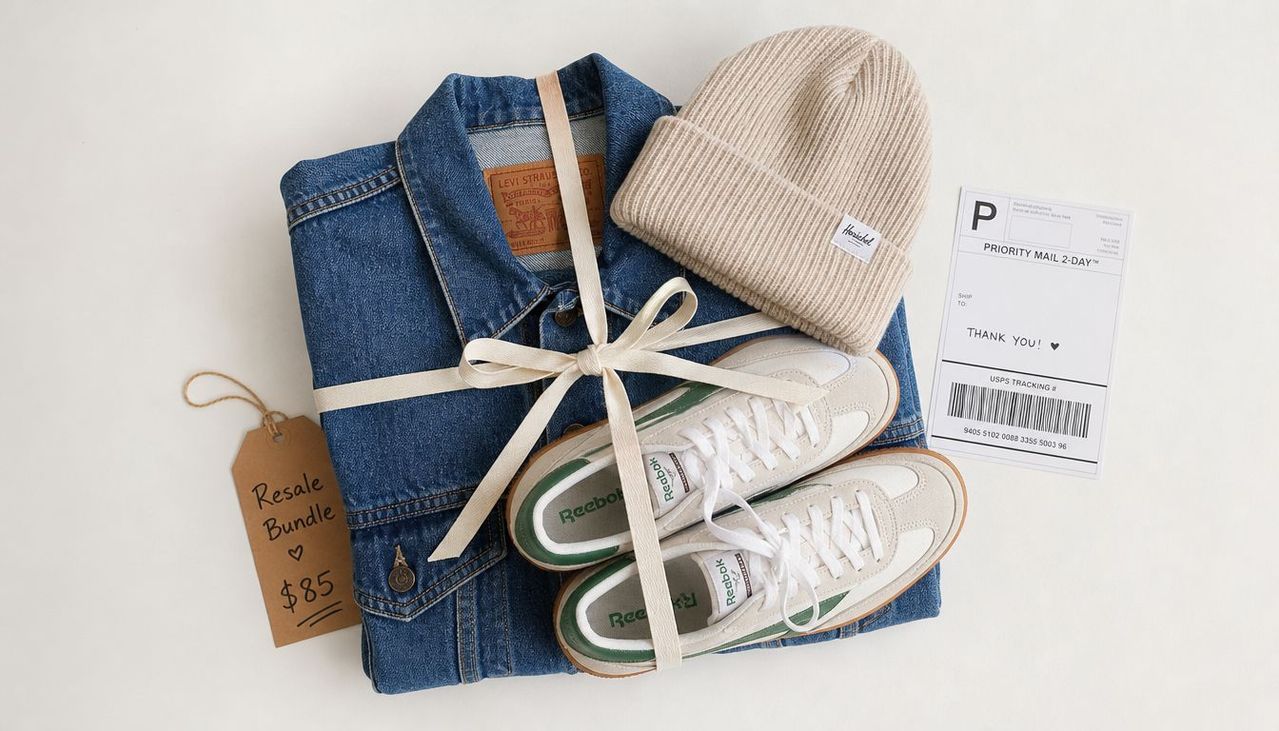
Table of Contents
You’ve got a rack full of items that looked promising when you bought them, but they’re now consuming space and attention. Buyers keep asking whether you’ll lower the price, while your average order is held down by single-item purchases. The obvious response is a discount. The more useful question is how to make a bundle that increases the value of the order without giving away the profit.
For a professional reseller, a bundle isn’t just a buyer-friendly button on Vinted, Wallapop, or eBay. It’s a small inventory system. You need a reason for the items to belong together, a price based on contribution margin, a listing that makes the contents obvious, and stock controls that prevent one component from selling on another channel first.
Table of Contents
- Why Bundles Work for Resale and When to Use Them
- Choosing Items That Belong Together
- Pricing Your Bundle to Protect Margin
- Creating Listings That Convert on Any Marketplace
- Shipping Fulfillment and Promotion Without Overselling
- Ready to Build Your First Profitable Bundle
Why Bundles Work for Resale and When to Use Them
A buyer looking for a children’s winter outfit may prefer one coordinated purchase over separate listings. The same applies to a streetwear look or a group of kitchen pieces that serve one purpose. Bundling works when it removes shopping decisions, moves several units in one order, and gives the buyer a clear reason to accept the combined price.
The market supports a more deliberate approach. One industry estimate values global secondhand product sales at $475.19 billion in 2025 and projects $854.57 billion by 2030, with a projected 12.4% CAGR, as reported in the global secondhand product market estimate. That growth does not make every bundle profitable, though. Your inventory still has single-quantity constraints, channel fees, packing time, shipping limits, and the risk that one component sells elsewhere first.
Use a bundle when the buyer sees a complete solution
Strong candidates usually share at least two of these traits:
- Same customer: A buyer searching for a children’s coat may also want matching trousers and a hat.
- Compatible sizing: Pieces should fit the same person or household. Mixed sizes need a clear explanation.
- Complementary use: A jacket, scarf, and boots support one outfit. Three unrelated tops do not.
- Similar condition: Pairing a pristine garment with visibly worn pieces can make the offer feel uneven.
- Efficient shipping: Items should fit one parcel without adding dimensional weight or packing work that erases the margin.
Do not combine items only because they have been sitting for a long time. A random group can lower perceived value, complicate photography, and leave the buyer with unwanted pieces. Review attach rate, the share of buyers who add or accept related items, alongside contribution margin. Also check inventory sync before publishing across marketplaces. If one component sells on another channel, pause or revise the bundle immediately.
A higher order total is not automatically a better sale. Extra payment fees, shipping, packing, and return exposure can make two standalone transactions more profitable.
Practical rule: Bundle around the buyer’s intended use, not your need to clear a shelf.
Choosing Items That Belong Together
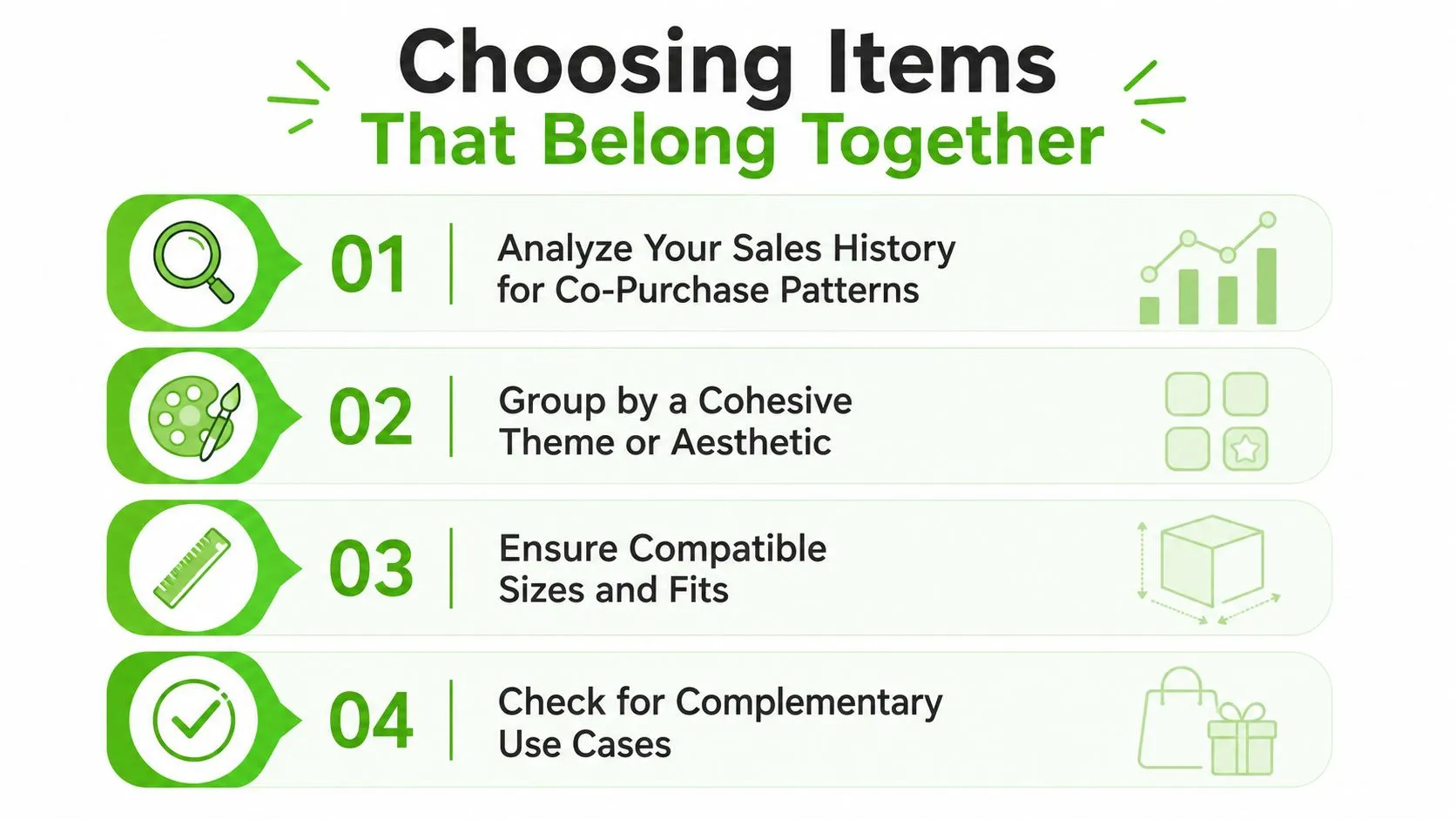
Start with your own inventory, not a generic list of popular combinations. Review sold items and buyer conversations for repeated pairings. If shoppers often ask whether a vintage blazer has matching trousers, or whether a children’s dress comes with a cardigan, those questions reveal bundle themes even when the items didn’t sell together historically.
A data-driven retail bundling study describes a useful sequence: mine co-purchase patterns, rank possible bundles by margin and assortment coverage, then test the strongest offers in experiments that represent normal traffic. Its reported optimized machine-learning policy produced an expected 35% revenue improvement versus a baseline based only on product co-purchase rates, as detailed in this retail product bundling analysis. Treat that figure as evidence for a process, not a promise for your resale shop. Secondhand inventory is less standardized, and single-quantity stock creates constraints that ordinary retail catalogs don’t have.
Build a theme, then test the physical fit
Use one of these starting points:
- A complete use case: Three children’s winter pieces in the same size, or a starter outfit built around a graphic sweatshirt.
- A recognizable aesthetic: Vintage brown leather, minimalist workwear, festival accessories, or a coordinated color palette.
- A buyer segment: Plus-size occasionwear, toddler basics, men’s running gear, or a specific designer label.
- A collection logic: Similar materials, era, print family, or season, provided the items still work together.
Check every item individually before grouping it. Confirm measurements, closures, stains, missing accessories, odors, and fabric wear. The bundle should communicate a consistent condition level. If one item has a flaw, show it in the photographs and mention it in the description rather than hiding it inside a larger offer.
Size compatibility needs more than matching labels. Compare actual measurements, cuts, and intended layering. A relaxed-fit jacket can work over a smaller knit, but two fitted garments in different size ranges may create returns and complaints. You can also use this guide to items suitable for resale when expanding your sourcing criteria.
Use your sales history as a starting signal, not a final decision. Pairwise affinity can overstate demand when buyers were choosing one item instead of another, and it says little about limited stock or substitution. Before publishing, ask: Would the same buyer reasonably want every component at the same time?
Pricing Your Bundle to Protect Margin
A bundle price should begin with realistic standalone resale comps. Don’t add inflated individual prices just to display a dramatic saving. Record what comparable items sell for in similar condition, then calculate the combined value before deciding whether the bundle deserves a discount.
A useful pricing model is:
Contribution margin = bundle price minus platform fees, shipping paid by the seller, packaging, expected return cost, and allocated item cost.
For secondhand stock, item cost can mean the purchase price, sourcing fee, or an internal inventory value. Use the method that matches your bookkeeping, but apply it consistently. If you acquired the items together, allocate the cost across the components so the bundle doesn’t appear profitable merely because one item’s cost was ignored.
Use mixed bundling instead of forcing the decision
Keep standalone listings active when each item has independent demand. Offer the coordinated bundle as an alternative, rather than requiring buyers to purchase everything. Research on personalized bundle pricing reports expected revenue improvements of 2% to 7%, depending on the retail setting, from data-driven price optimization, as summarized in this bundle pricing research overview. The result isn’t automatic, but it supports testing price and structure instead of guessing.
Bundle discounts often work best when the saving feels meaningful without making the seller look desperate. Practitioner guidance places effective savings roughly in the 10% to 25% range, but the correct level depends on fees, shipping, condition, and buyer demand. A deeper discount can reduce contribution margin without creating enough additional demand to compensate.
| Bundle Price | Discount | Fees and Shipping | Contribution Margin |
|---|---|---|---|
| Sum of realistic standalone comps | None | Deduct actual marketplace fees and shipping exposure | Highest price, but potentially lower conversion |
| Moderately reduced bundle price | 10% to 25% saving | Deduct fees, packaging, combined parcel cost, and return exposure | Often a practical balance between value and profit |
| Aggressively reduced bundle price | More than the normal saving range | Same deductions, with less revenue available to absorb them | Can move stock while weakening profitability |
Run the calculation before publishing, not after the sale. A bundle that combines light accessories may reduce handling per item. A bundle containing boots, a coat, or fragile homeware may increase parcel size and packing time enough to erase the apparent benefit.
Margin beats the headline discount. Buyers need to see value, but sellers need to know what remains after the order leaves the warehouse.
Creating Listings That Convert on Any Marketplace
A bundle listing needs to answer the buyer’s questions before they send a message. Use one hero photograph showing every component together, followed by individual images for labels, measurements, fabric texture, flaws, and condition. A flatlay works well for an outfit, while a grouped standing photograph can show the shape and scale of heavier garments.
Put the bundle contents in the first line
Titles should identify the theme and the main searchable attributes. A practical structure is:
[Bundle type] + [brand or style] + [key items] + [size] + [condition]
Examples:
- Vintage workwear bundle, leather jacket and boots, women’s medium
- Kids winter clothing bundle, coat, trousers and hat, same size
- Streetwear outfit set, graphic sweatshirt and cargo trousers, men’s large
Don’t use “bundle” as the only value proposition. State exactly what the buyer receives, whether the items can be split, and whether measurements are included. Use short paragraphs and bullets so the listing remains readable in a mobile feed.
Included: Vintage leather jacket, printed silk scarf, brown lace-up boots.
Condition: Jacket has light surface wear, scarf is clean, boots show expected sole wear.
Fit: Please compare the listed measurements with a similar item you own.
Price: Bundle price reflects the combined saving.
Shipping: Packed and shipped together in one parcel.
AI can help draft titles, descriptions, translations, and photo backgrounds, but it shouldn’t decide condition or measurements. Verify every generated detail against the physical items. For practical guidance on creating stronger listing imagery, use this sale-by-photo guide.
Marketplace behavior still matters. Vinted buyers may respond to clear size and condition language, Wallapop listings benefit from local pickup and parcel clarity, eBay rewards detailed item specifics, and an own-store listing can support richer bundles and inventory logic. If a platform doesn’t support a true bundle SKU, create a dedicated listing with component IDs in your internal notes, then reserve those components immediately when it sells.
Shipping Fulfillment and Promotion Without Overselling
The most dangerous bundle error often happens after the buyer pays. One component remains live on another marketplace, another seller on the team doesn’t see the sale, and the same item gets purchased twice. A manual “reserved bundle” note helps only if every channel and person follows the same process.
A secondhand store pricing guide emphasizes recent resale comparisons and condition-based pricing rather than blanket discounts. That principle also applies operationally. Your system should identify each component, not just the bundle listing, so a sale changes the status of every item included.
Use a fixed fulfillment sequence
- Receive the order: Record the bundle ID and every component SKU.
- Reserve the components: Delist or mark each item unavailable on all other channels before picking.
- Recalculate the parcel: Weigh the complete order, check dimensions, and confirm the shipping label covers the actual package.
- Pack and inspect: Photograph or scan the contents, protect delicate items, and check that the condition matches the listing.
- Update every channel: Close the bundle listing and remove the individual component listings once the sale is confirmed.
Combined shipping isn’t automatically cheaper. A coat and boots may need a larger parcel, stronger packaging, and a different carrier tier. Undercharging postage can turn a good bundle into a loss, so use the packed dimensions rather than adding item-by-item estimates.
Promotion should support the test rather than hide a weak offer. Publish coordinated bundles when your store has enough relevant traffic, renew stale listings according to marketplace rules, and use a unified inbox so bundle questions don’t sit unanswered on one channel. Track attach rate, sell-through, contribution margin, packing time, and returns. Keep the bundle when it improves the overall result, reprice it when buyers engage but don’t convert, and split it when one component attracts demand on its own.
A centralized cloud-based order management workflow can help teams connect orders, stock changes, and channel updates. The tool matters less than the discipline: every bundle must have a component list and a single source of truth.
Ready to Build Your First Profitable Bundle
Start with one controlled test, not a catalog-wide change. Choose items with a clear buyer, compatible sizing, similar condition, and a shipping profile you can price accurately. Check each component’s standalone demand before combining it. A bundle should improve the sale, not hide an item that would move faster alone.
Price from realistic comparable sales, then subtract marketplace fees, packaging, postage, discounts, and expected handling time. Keep standalone options available when buyers may want only one component. Test a moderate saving instead of assuming the deepest discount will win. Judge the result by contribution margin and operational effort, not by the number beside “saved.”
Make the listing understandable without a message thread. Show the complete group, photograph each component, include measurements and flaws, and state the shipping arrangement. Assign a bundle ID to each component record, reserve stock across channels as soon as the order arrives, and confirm the packed parcel cost before dispatch.
Know when to split the offer
Split the offer when items serve different audiences, have incompatible sizes, show sharply different condition levels, or require packaging that makes the combined parcel expensive. An add-on may work better when one core item attracts buyers and a smaller accessory raises the order value without forcing a second major purchase. Keep pieces separate when each has strong independent demand.
Inventory decisions also affect the wider resale opportunity. The Mercari report estimated that households held $559.8 billion in unused products, representing 21.1 billion unused items, or 161 items per household, and estimated that 2.9 billion products fit for sale were discarded or recycled in one year, according to the reported U.S. resale inventory data. For resellers, the practical lesson is to curate carefully, price thoughtfully, and track every component from listing through delivery.
Build the first bundle, record standalone prices and costs, publish it only on channels where the buyer shops, and review the margin after fulfillment. Scale combinations that move inventory without adding excessive work, overselling risk, or avoidable returns.
Ruit helps professional secondhand sellers manage bundle-ready inventory, multichannel listings, synchronized stock, orders, messaging, and pricing from one operating system. Visit Ruit to see how a connected workflow can help you publish and fulfill bundles while protecting margin.