Four Week Marketplace SEO for Listings: Actionable Tactics for Sellers


Table of Contents
- What marketplace SEO for listings actually means
- On-page listing optimisation: titles, descriptions, images and specs
- Keyword strategy for listings: research and intent matching
- Platform rules: eBay and Vinted listing tips
- Technical foundations: crawlability, duplicates and pagination
- Scaling listing quality across hundreds of SKUs
- Measuring what works: metrics and simple tests
- Your first four weeks: a practical starting plan
- How tooling can help you apply this at scale
- FAQ
- Recommended
Marketplace SEO for listings means deliberately optimising each product listing so it ranks higher inside marketplace search and attracts more buyers. Start with three things: a keyword-rich title, an accurate primary photo and complete item specifics. These three fields drive the fastest visibility gains, according to practitioner guidance consolidated across major marketplace SEO resources, and sellers moving goods on platforms covered by HMRC digital platform reporting rules should treat them as the baseline, not an afterthought.
TL;DR:
- Optimising titles, images, and item specifics quickly boosts marketplace listing visibility, with these fields responsible for most of the search performance gains.
- Sellers must focus on winning individual auctions within the platform’s algorithm, as they cannot modify overall search ranking factors or platform architecture.
- Accurate, detailed information in item descriptions, label close-ups, and complete attributes are more effective than keyword stuffing for ranking and trustworthiness.
- Using the platform’s own search data and sold listings helps identify relevant search phrases, which should be matched to buyer intent for better targeting.
- Automated tools like inventory management software are essential for scaling listing quality and maintaining consistent updates across multiple channels.
What marketplace SEO for listings actually means
Marketplace SEO differs from single-brand e-commerce SEO in one key way: you are not optimising a whole site, you are optimising one listing among thousands of near-identical competitors. A single-brand store controls its schema, internal links and site architecture. A marketplace seller controls only what fits inside a title field, a description box and a set of attributes, while the platform’s own algorithm decides how that listing competes against other sellers’ near-duplicate items.
That changes the job. Your listing has to win on the fields you can edit, because you cannot change the platform’s search algorithm, category structure or how competitors price similar stock. Buyer-generated reviews, platform-wide promotions and limited control over structured data all shape how your item surfaces, both inside the marketplace and in external search results like Google.
A few structural differences worth knowing before you optimise anything:
- You compete against other sellers inside the same search results, not just against other websites.
- Most marketplaces give you limited or no control over page-level schema markup.
- Item condition, stock status and seller rating affect ranking in ways a single-brand store rarely has to manage.
- Selling activity on these platforms can trigger reporting obligations: digital platforms must collect and report seller information when a seller exceeds 30 sales or €2,000 in revenue within a calendar year.
Knowing this distinction early saves time. You are not building authority across a domain, you are winning individual auctions for attention, one listing at a time.
On-page listing optimisation: titles, descriptions, images and specs
This is where most of the visibility gain happens. Four fields do the heavy lifting: title, description, images and item specifics.
Titles need the buyer’s exact search terms near the front, not brand flourishes. A workable template is brand, item type, key attribute, size, colour, for example “Levi’s 501 High Rise Jeans Blue Denim UK 12”. eBay allows up to 80 characters, so front-load the words buyers actually type; a title template guide is useful if you want ready-made structures to adapt. Vinted’s title field is shorter and more forgiving of plain language, so skip the keyword stacking and describe the item the way a buyer would search for it.
Descriptions should answer the five questions buyers ask before clicking “buy”: condition, measurements, material, any flaws, and provenance if relevant (original receipt, authentication, vintage era). Write these as short, factual sentences rather than marketing copy. A buyer deciding between two near-identical jumpers will pick the one with exact pit-to-pit measurements over the one promising it is “gorgeous”.
Images follow a fixed order that performs consistently across platforms:
- Hero shot: full item, good light, plain background.
- Front and back, laid flat or worn.
- Close-up of any flaw, stitching detail or unusual feature.
- Label, size tag and care tag, clearly legible.
- Brand or authenticity marks, if applicable.
Buyers respond strongly to that fourth and fifth step. Close-ups of labels, stitching and care tags read as authenticity evidence, and including them systematically tends to improve both conversion and perceived trustworthiness, particularly for vintage, designer or regulated items such as watches, where preparing an item correctly for sale matters as much for compliance as for buyer confidence.
Item specifics and structured data matter more than sellers assume. Fill every attribute field the platform offers, size, colour, material, era, even when it feels repetitive with the title. These fields feed filters buyers use to narrow results, and an empty field can exclude your listing from a filtered search entirely.
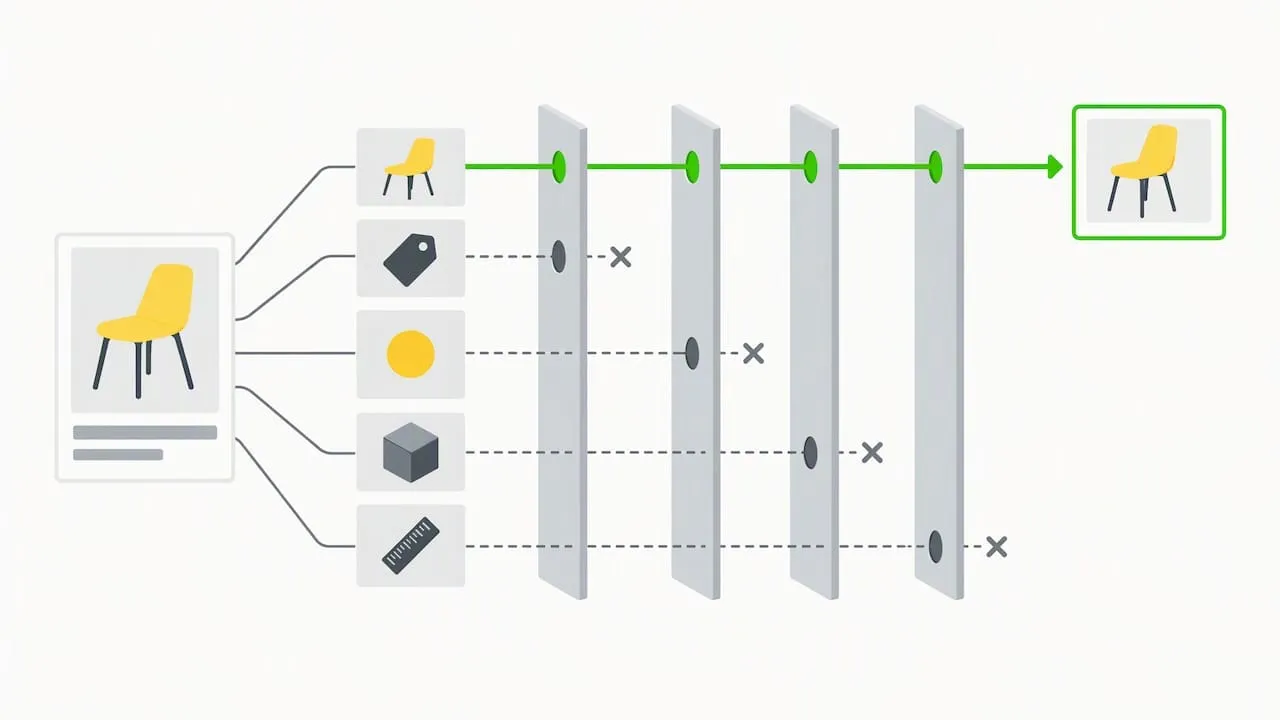
Authenticity beats keyword stuffing every time. Marketplace algorithms tend to favour detailed, accurate listings over ones stuffed with irrelevant brand names or repeated keywords, and that kind of stuffing can lead to suppression or removal.
Pro Tip: Write your measurements and material details once in a master document, then copy them into every listing field so descriptions never drift between what you wrote last week and what you write today.
Keyword strategy for listings: research and intent matching
You do not need expensive keyword tools for this. Marketplaces give you the research data directly.
- Type your item into the platform’s own search bar and note what autocomplete suggests, that is live buyer language.
- Check sold listings for similar items and see which words appear in the titles that actually converted.
- Run a
site:search on Google for the marketplace plus your item type to see which listings rank externally and what phrasing they use.
Once you have a shortlist of phrases, match them to intent. A buyer searching “Nike Air Max 90 UK 9” is ready to buy, so that phrase belongs in your title. A buyer searching “best trainers for flat feet” is still researching, so that phrase, if relevant at all, belongs in the description, not the title.
Apply the 80/20 rule to where you spend your testing time: title, primary image, price and item specifics drive most of the visibility and conversion difference. Spend your limited testing hours there before touching secondary fields like shipping text or seller bio.
Platform rules: eBay and Vinted listing tips
Each platform rewards slightly different habits, and both publish their own rules worth checking directly: eBay’s help centre and Vinted’s help pages cover category restrictions and prohibited content you should confirm before listing.
For eBay:
- Use the full title character limit with brand, model, size and colour near the front.
- Fill every item specific field the category offers, even optional ones.
- Choose the most specific category available, not the broadest.
- Mention shipping speed or combined postage in the description if it is a selling point.
For Vinted:
- Lead with photos. The app is browse-first, so a strong hero image matters more than title phrasing.
- Avoid stuffing unrelated brand names into titles or tags, it reads as spam and can get listings removed.
- Use plain condition language such as “worn twice, no flaws” rather than vague terms like “good condition”.
- Keep descriptions short and factual, long blocks of text perform worse on a mobile-first app.
Both platforms penalise listings that misuse category or brand fields to chase extra traffic, so stick to what the item actually is.
Technical foundations: crawlability, duplicates and pagination
Marketplaces run on huge catalogues, so indexation is not automatic. A few technical habits protect your listing’s visibility even though you do not control the platform’s core architecture:
- Avoid creating duplicate listings for the same item across categories on one platform, duplicate content inside a marketplace can dilute or suppress both copies.
- When cross-listing the same item across multiple marketplaces, keep titles and descriptions consistent in substance even if phrasing varies slightly for each platform’s style.
- Let each platform’s own sitemap and indexing systems work as intended, relisting too frequently without cause can reset accumulated visibility signals rather than improve them.
- Structured data fields like item specifics act as the closest thing to schema markup you control, so treat them as a technical input, not a cosmetic one.
Cross-listing itself is not the problem, selling the same item twice and then cancelling an order is. Any workflow that pushes one listing to several channels needs to remove it everywhere the moment it sells.
Scaling listing quality across hundreds of SKUs
Doing this well for ten listings is easy. Doing it for hundreds requires a system.
- Keep one master record per item, measurements, materials, provenance, and generate each platform’s listing copy from that record rather than writing from scratch each time.
- Batch-edit titles and descriptions in fixed sessions rather than touching listings one at a time across the week.
- Schedule periodic audits, monthly is reasonable, to catch listings with missing specifics or outdated stock status.
- Treat inventory sync as a trust issue, not just a convenience one: oversells damage seller ratings, and seller ratings affect ranking.
A sensible workflow looks like this: draft once, verify the master record, publish across channels, monitor early performance, then relist or refresh if a listing stalls. Tools built for managing eBay inventory across channels exist specifically because manual syncing breaks down once you pass a few dozen active listings.
Pro Tip: Run your audit on a fixed day each month rather than “when you get time”, the listings that slip through the cracks are usually your best sellers that have simply gone stale.
Measuring what works: metrics and simple tests
Track four numbers consistently: impressions, click-through rate, conversion rate and sell-through time. These tell you whether a listing is being found, whether it is appealing enough to click, and whether it actually closes a sale.
- Change one field at a time, usually the title or primary image, and leave it running for a fixed period, two weeks is a reasonable minimum before judging results.
- Compare impressions and CTR before and after the change rather than relying on gut feel.
- Use each platform’s own seller reporting alongside Google Search Console if your listings are indexed externally.
- A sudden drop in impressions with no change on your end can signal algorithmic suppression, often triggered by policy violations or stale content, and is worth investigating through the platform’s seller tools.
Small, controlled tests on titles and primary images often reveal real CTR differences, so resist the urge to change five fields at once and guess which one mattered.
Your first four weeks: a practical starting plan
Pick 20 listings. Week one, rewrite titles and fill every item specific. Week two, replace or reorder photos using the five-shot sequence. Week three, tighten descriptions with exact measurements. Week four, review impressions and CTR, then repeat on the next batch. The most common mistake is changing everything at once and losing track of what actually worked.
- Luis
How tooling can help you apply this at scale
Doing all of this manually across dozens of listings takes hours you probably do not have. Ruit lets you list an item once and publish it on Vinted, eBay, Wallapop, todocoleccion, Shopify, WooCommerce and PrestaShop at the same time, so the title, description and specs you just optimised reach every channel without retyping them.
When an item sells on one channel, Ruit syncs stock and removes the listing from the others, which protects the seller metrics that affect ranking. It also auto-relists on Vinted and Wallapop so a stalled listing does not need manual attention every week, brings Vinted and Wallapop buyer messages into one inbox, and drafts titles and descriptions with AI, a useful starting point for the master-record approach described above, though every draft still benefits from a human check against your actual measurements and condition notes.
- Batch listing: write once, publish everywhere, instead of repeating the same edits per platform.
- Inventory sync: prevents the oversells that damage seller standing.
- Auto-relist: keeps listings active on Vinted and Wallapop without manual repetition.
- AI drafting: speeds up the writing stage covered in the on-page optimisation section above.
Check Ruit’s plans or visit the main site to see how it fits into your current listing workflow.
FAQ
Is it worth paying to promote listings on a marketplace?
Paid promotion can increase short-term visibility, but it works best on listings that are already well-optimised, a weak title or poor photos will waste the spend. Test organic fixes first, title, images and specifics, before paying for extra exposure.
Is SEO still worth doing on marketplaces in 2026?
Yes, marketplaces still rank listings using the same core signals, relevance, completeness and buyer engagement, so a well-optimised listing continues to outperform a thin one. The tactics change slowly; title accuracy, image quality and complete specifics remain the fields that matter most.
What is the 80/20 rule in listing SEO?
It means focusing most of your testing effort on the small number of fields that drive most of the result, typically title, primary image, price and item specifics. Spend less time tweaking secondary fields like seller bios or shipping text, which rarely move visibility much.
Can I boost a marketplace listing for free?
Yes, rewriting your title with buyer search terms, reordering your photos to lead with a strong hero shot and completing every item specific field cost nothing and often lift visibility more than paid promotion. These are the same fixes covered in the on-page optimisation section above.
Do sellers need to worry about tax reporting on marketplaces?
UK digital platforms must collect and report seller information once a seller passes 30 sales or £1,700 in revenue within a calendar year, with reports submitted to HMRC by 31 January. This applies regardless of how well a listing is optimised, so active sellers should check the gov.uk guidance directly.